 Omakase Tokyo Tour
Omakase Etiquette: The Real Rules
The eating rules
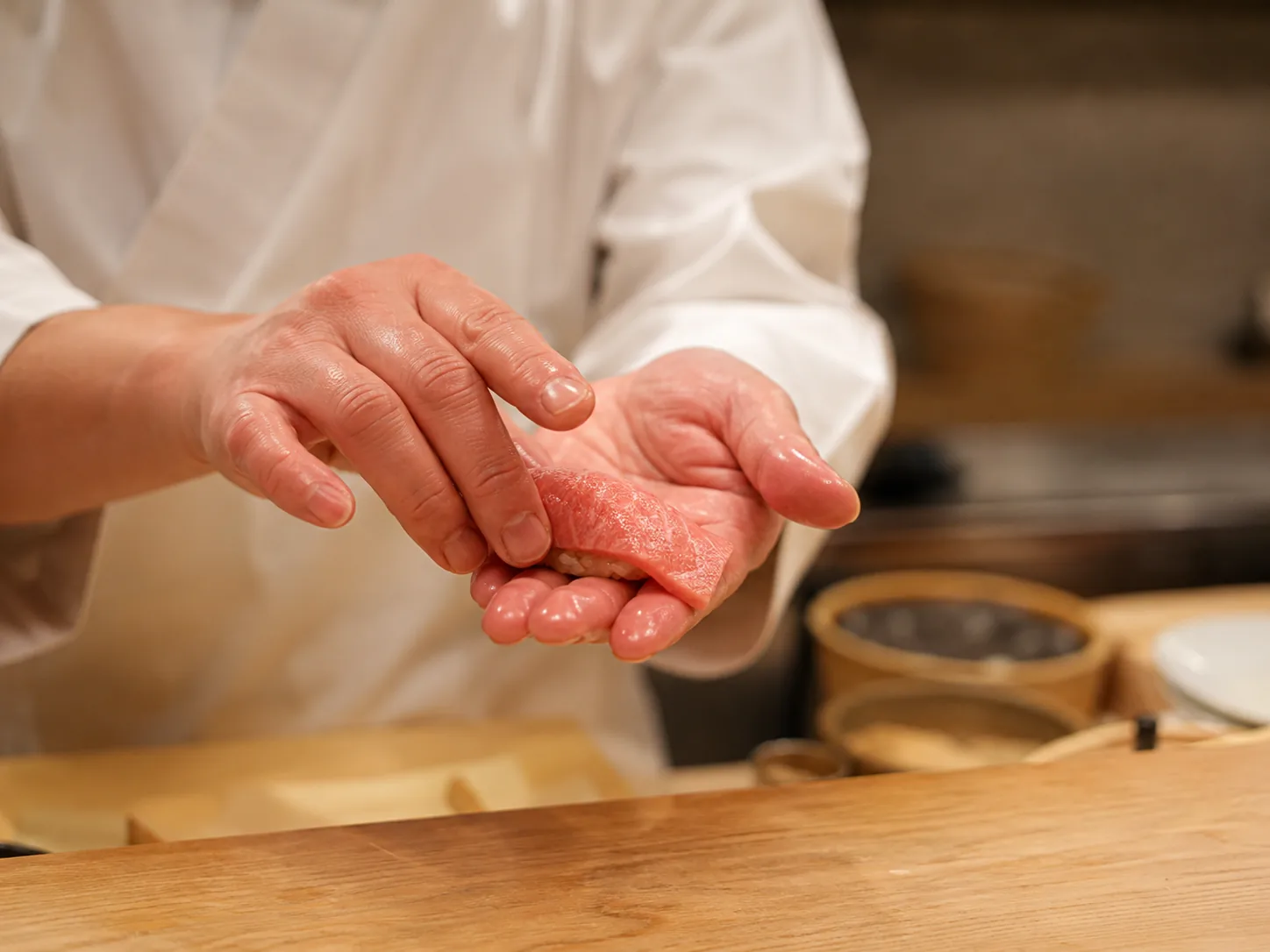
Eat the nigiri right after the chef places it.
The chef times the courses. Each piece is meant to be eaten in a specific window; the temperature, the soy brush, the conversation — all timed together. Eat it soon. Holding it while you think, talk, or shoot photos means the fish warms and the seasoning changes.
Fingers or chopsticks are both correct for nigiri.
Either is normal at any counter, from casual to high-end. There’s no rule. Use what feels right.
Dip fish-side, lightly, if soy is even provided.
Many good counters brush soy or salt onto the piece before serving; they’ve already seasoned it. If a small dish of soy sits in front of you, you can dip the fish side lightly. Don’t stir wasabi into the soy sauce at a good counter; the chef has already balanced the piece. If wasabi is offered separate, a small dab is enough.
Finishing your plate is polite in Japan.
It’s a sign you enjoyed the meal. At omakase, you can ask the chef to skip an ingredient if you have an allergy or genuine aversion; tell them when you book or tell the host when you arrive. The chef will work around it.
Ordering more after the course is normally fine.
If the counter offers okonomi (additional pieces you choose), you can ask for more. It’s part of the meal.
Talk, photos, and atmosphere
It is fine to talk.
Counters are social places. The chef enjoys conversation about the fish, your trip, the sake. Just follow the room’s volume. If other guests are quiet, keep it low. If it’s lively, talk back.
Quick photos of the sushi are widely tolerated.
If you want a shot of a piece before you eat it, go ahead. But ask before photographing the chef. They’re working and don’t want to end up in your Instagram mid-motion. Don’t let the nigiri sit while you shoot it; eat it after.
The “80% full” idea is not an omakase rule.
“Hara hachi bu” is a general Japanese eating proverb meaning eat until 80% full. It’s not specific to omakase and you don’t need to follow it. Eat as much as feels right.
Frequently asked questions
What do I do with the wasabi?
At a good counter, the chef has already seasoned the piece. Don’t stir wasabi into soy sauce. If a small dish of wasabi sits in front of you and you want more heat, use a tiny dab. That’s it.
Can I take photos at omakase?
Yes, quick shots of the sushi are fine. Ask before you photograph the chef — they’re working and don’t want a camera in their face. And eat the piece after you shoot it, not before; let the chef’s timing matter.
Is there a dress code?
Smart casual solves everything. See what to wear for the full list, but the short version is: clean jeans are fine, avoid strong perfume or cologne, no swimwear or tank tops. Formal jackets are only a thing at a handful of luxury counters.
Should I order okonomi?
If the counter offers it, yes — you can ask for additional pieces you choose. It’s normal to order extras after the course. Just ask the chef.