 Omakase Tokyo Tour
How Much Does Omakase in Tokyo Cost?
The ladder: what you pay for at each level
The price reflects four things: fish grade, counter seats, chef labour, and location. A lunch counter near a station serves perhaps 20 people a day on a 60-minute turnover; a quiet Ginza counter hosts a handful per night, pacing each course. Both are paying rent in the same city and sourcing from the same Toyosu market. The difference is seat time and ritual.
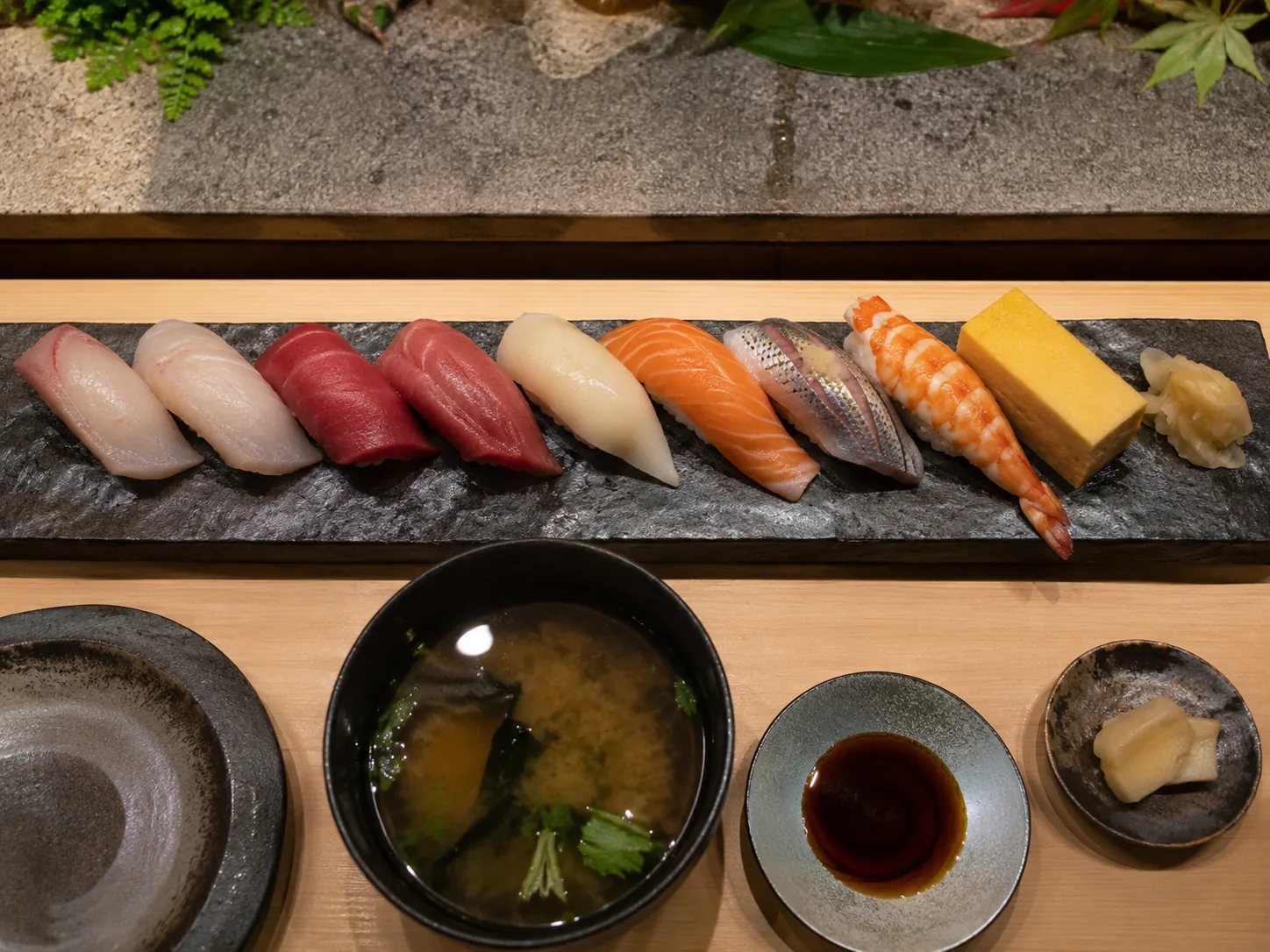
Lunch counters (¥3,500–¥7,000) turn tables fast. You sit, the chef serves a set course (10–14 pieces typically), and the counter flips for the next guest. No English, no long conversation. Fish is good; you eat and move.
Solid dinner counters (¥10,000–¥20,000) take time. The chef paces courses across 1.5 to 2 hours, talks to each guest, remembers what you ate. Fish is graded higher; the pace is leisurely. This is where most Tokyo residents spend money on omakase.
Luxury counters (¥30,000+) are ritual spaces. A handful of seats, a chef who trained for decades, fish flown in on specific days, tea ceremony-level pacing. The famous names (Saito, Yoshitake, Jiro) book out weeks or months ahead and some take reservations only via hotel concierges or regular-customer introductions.
What the hosted experiences on this site cost
The operator books seats at quality counters and supplies an English-speaking host. You pay for two things: the seat (what the counter charges) and the host service (the mark-up that makes it cancellable and bookable in English). Our six products run $61 to $280 per person. None are Michelin stars; all solve the real problem: reservation access and language.
- $61 sake tasting — 1.5 h, 10 pieces, 8+ sake types.
- $111 tuna auction — 2 h, watch Toyosu, breakfast at Sushi Dai or Bentomi.
- $133 wagyu + omakase — 3 h walking tour, Shinjuku food scene.
- $154 private counter — 2 h, Edomae, one group only, conversation-focused.
- $246 Ginza night — 3 h, 16 courses, unlimited sake, geisha bar.
- $280 Toyosu exclusive — 3 h, market behind-the-scenes, luxury omakase, very limited.
The $111 tuna auction tour and the $133 walking tour are high-volume products with deep review bases (149 and 311 reviews respectively). The $154 private counter and $280 Toyosu experience are newer listings with small review bases – that honesty matters when choosing.
How to save
Lunch omakase is the money-saver: expect ¥4,500–¥7,000 at a respectable counter versus ¥10,000–¥20,000 at night. If you book a hosted experience, the $61 sake tasting is a real introduction; the $111 auction tour lets you see how Toyosu works. The walk-in prices at independent counters are lower than hosted seats, but you need Japanese, and you can’t cancel online.
Frequently asked questions
Why is omakase so expensive in Tokyo?
Fish quality, chef skill, and counter seats in expensive real estate all cost. At a good counter you sit for two hours; the chef is handling maybe three tables per night. That pace — not speed — is what you pay for. Lunch is cheaper because tables turn faster.
What’s the difference between a ¥4,500 lunch and a ¥20,000 dinner?
Speed versus pacing. Lunch is 45 minutes to an hour on a high-turnover counter; dinner is 1.5 to 2 hours with the chef talking and pacing each piece. Fish grade is higher at night too.
Is the $61 hosted experience worth the money?
It depends what you want. The $61 comes with a 10-piece sushi course and unlimited sake tasting; you get a real meal and real sake choices. The $133 walking tour covers more ground and shows you Shinjuku's food scene. See is omakase worth it for the fuller case.