 Omakase Tokyo Tour
Omakase in Tokyo, Explained
I’ve been walking visitors through Tokyo’s sushi counters for 11 years — started as a kitchen porter in a Ginza restaurant before switching to guiding — and the confusion is always the same. Omakase is not a restaurant category; it’s a price ladder. And the reservation wall is the actual problem you’re solving by booking hosted, cancellable seats on GetYourGuide. Here’s what matters before you sit down.
Omakase is a price ladder, not a lottery
Tokyo omakase starts around ¥3,500 at the cheapest lunch counters. Most solid counters run ¥10,000–¥20,000 for dinner. The famous names — the tier where reservations come only via introductions or hotel concierges — charge ¥30,000 and up. Lunch at a respectable place might be mid-¥4,000s to ¥7,000; a 14-piece seasonal lunch course can sit around ¥4,800. A 12-piece course at a mid-range counter starts around ¥6,600. Piece counts vary wildly: somewhere between 10 and 26 courses depending on the venue and price. The hosted experiences here run $61 to $280, and that price covers the seat, the host, and the logistics — not the fish itself, which costs what it costs.
The reservation wall is why hosted seats exist
The famous counters book out the moment slots open. Many take new bookings only through hotel concierges or regular-customer introductions. That inaccessibility is exactly why GetYourGuide sells hosted, cancellable seats. A bookable, cancellable slot with an English-speaking guide is the actual product — say so plainly. You’re not paying for a three-star experience; you’re paying to skip the wall. That’s honest.
The real etiquette rules are few
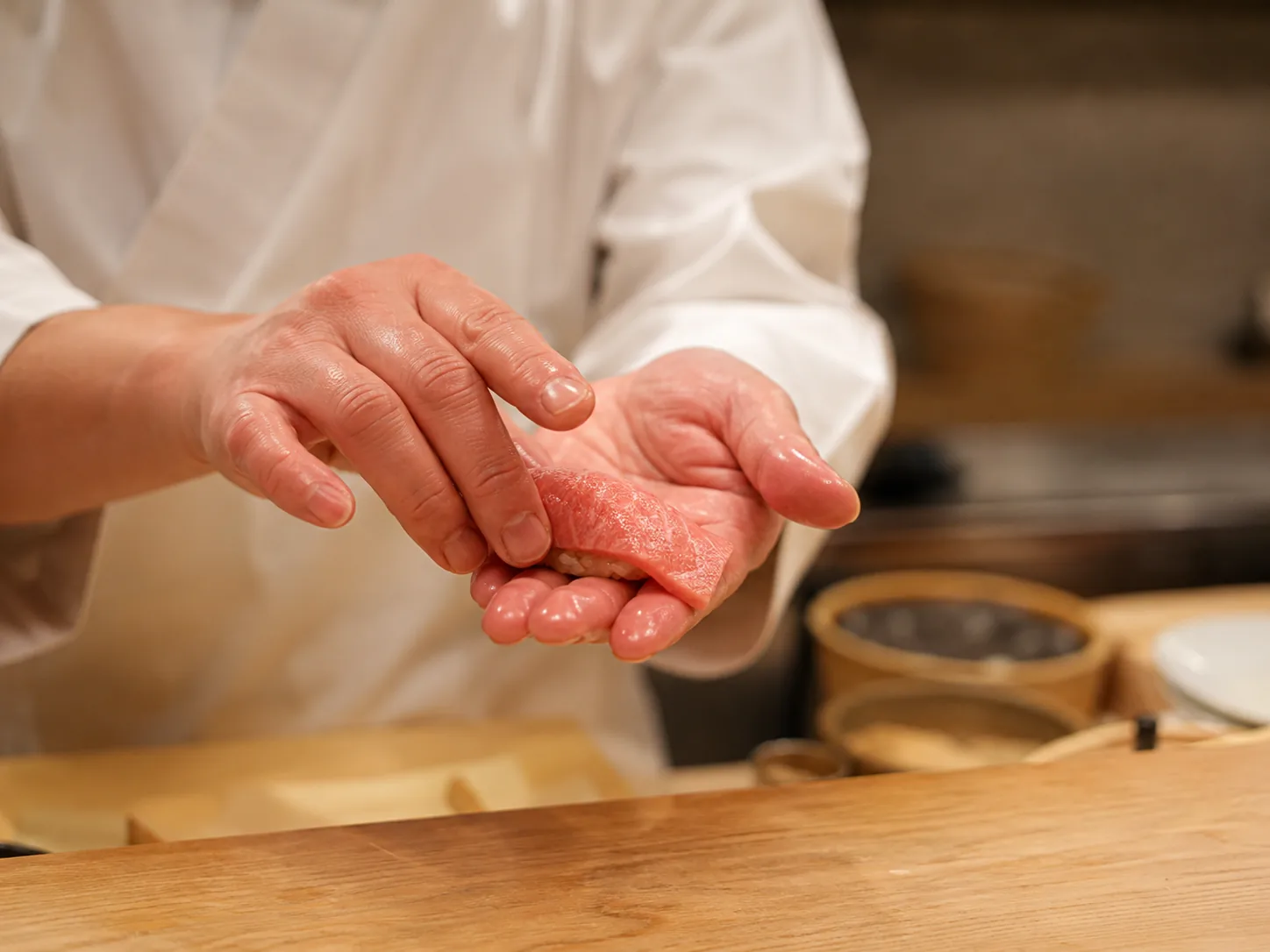
Eat nigiri soon after it’s placed on the wood or ceramic in front of you. The chef paces the meal; you follow his rhythm. Fingers or chopsticks are both correct for nigiri. If soy is even provided — many chefs pre-brush the piece — dip fish-side only, lightly. Don’t stir wasabi into the soy sauce at a good counter; the chef has already seasoned the piece. Finishing your plate is polite in Japan. You can ask the chef to skip an ingredient you can’t eat; allergies must be mentioned when you book. Talk is fine — counters are social places — just read the room’s volume. Quick photos are widely tolerated, but ask before photographing the chef, and don’t let the nigiri sit while you shoot it. The 80-percent-full idea you see online is a general Japanese eating proverb, not an omakase rule. Ordering more after the course is normally fine; ask for okonomi (additional pieces you choose).
Dress code and the perfume rule
Smart casual solves everything. Clean jeans are fine at hosted experiences and most counters. Avoid strong perfume or cologne; it genuinely interferes with the aroma of the fish and other guests’ meals, and several high-end counters explicitly ask you not to wear it. No swimwear or tank tops. Take caps off indoors. Formal jackets are only required at a handful of luxury counters.
No tipping, anywhere in Japan
Tipping is not customary anywhere in Japan — not at omakase, not in taxis, not anywhere. Leaving cash as a tip can cause genuine confusion; staff may actually chase you down to return it. Gratitude is said, not paid. After you eat, you say “gochisōsama deshita” (thank you for the meal). That’s the entire gesture.
Toyosu market and the tuna auction
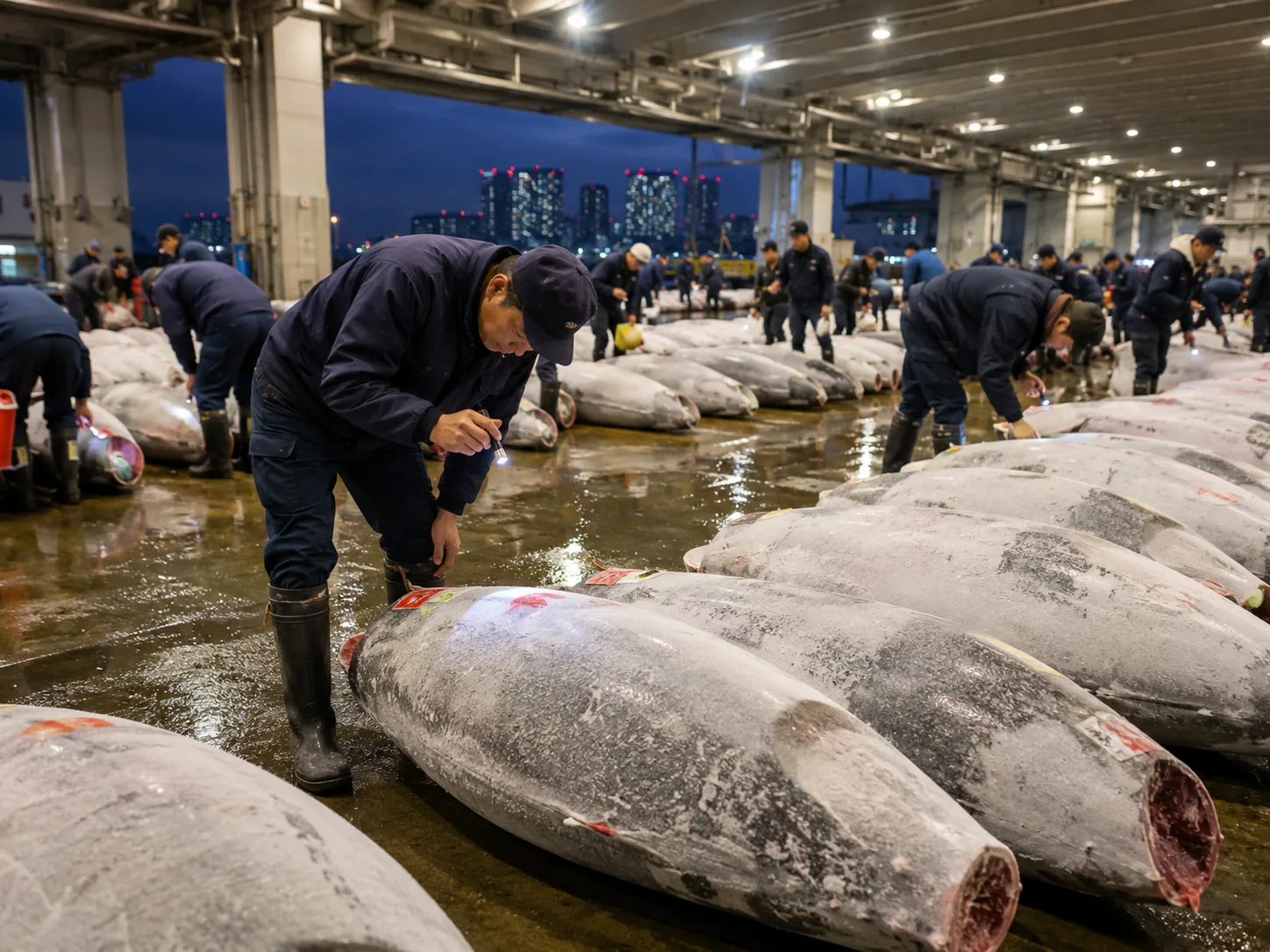
The wholesale fish market moved from Tsukiji to Toyosu in October 2018. The tuna auction happens at Toyosu on a public viewing deck; some tours arrange closer access with a dealer. The auction is genuinely fast: bidders move at a blur, and the tuna sit motionless on ice. Tsukiji’s outer market remains a working street-food and knife-shop district and is still worth a morning walk. Shijô-mae Station on the Yurikamome line serves Toyosu Market if you’re going alone.
Edomae sushi is Tokyo’s thing
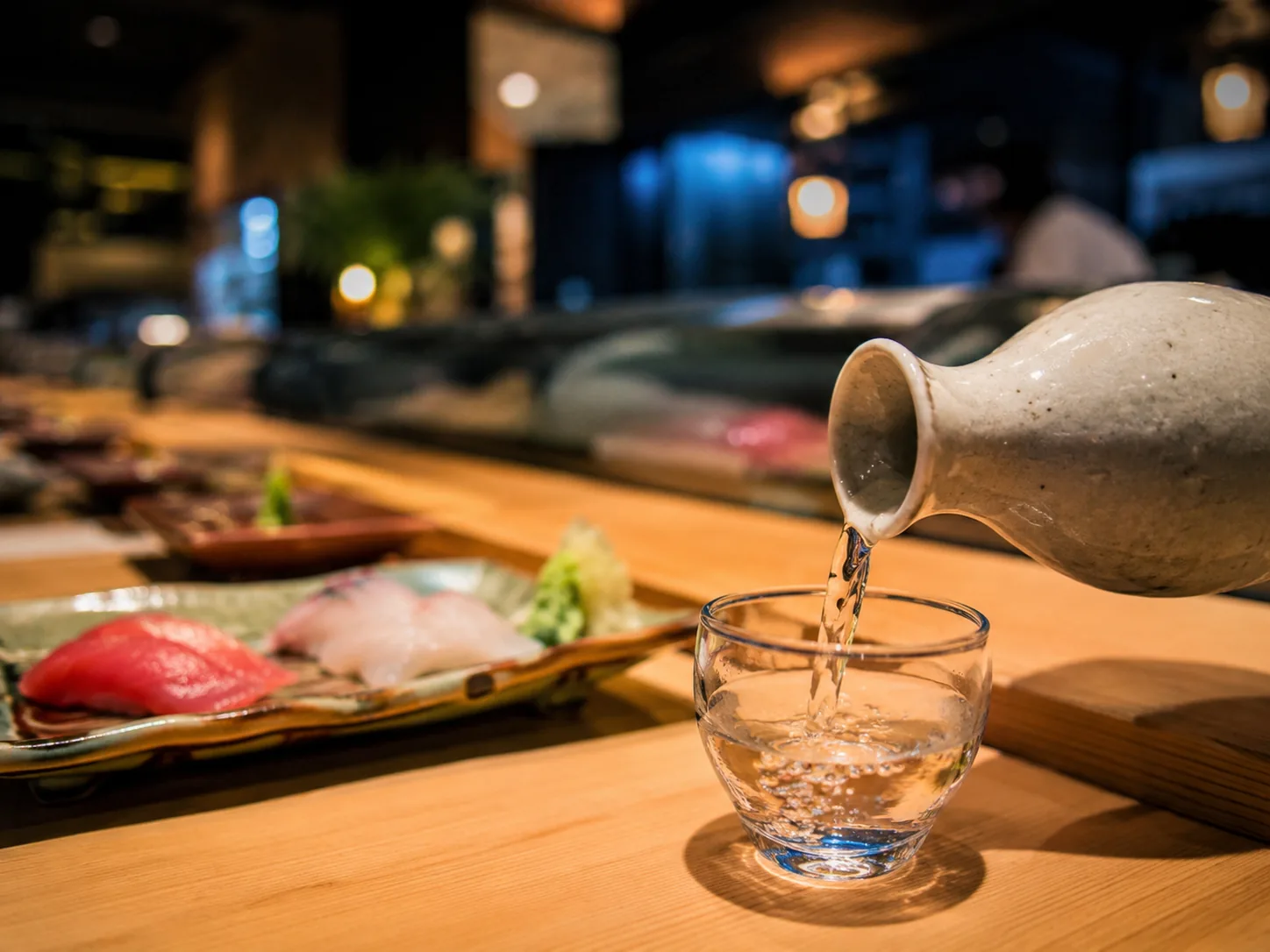
Omakase in Tokyo means Edomae — the local Edo-period tradition of pre-seasoned nigiri. The style is specific: lightly vinegared rice, no elaborate plating, the fish doing the talking. Tokyo is the sushi city: Edomae is native, the tuna comes through Toyosu, and the density of solid counters is unmatched. Kyoto has kaiseki and its own traditions (saba-zushi, hako-zushi); both cities are expensive at the top end. For omakase sushi specifically, Tokyo wins.
Duration and what to expect
A typical omakase sitting runs 1.5 to 3 hours depending on the counter and the pace the chef keeps. At old-school high-end counters the meal itself can be far shorter than people expect — maybe 45 minutes of actual eating, the rest conversation and pacing. The hosted experiences here are timed for visitors and run longer. The $61 sake tasting is 90 minutes. Most sit at 2 to 3 hours. You will not leave hungry; a 10-piece sushi course plus sake or tea is a full meal. A 16-course omakase is genuinely large.
The honest bottom line
Book ahead. The famous counters book via introductions only. The mid-tier counters book 2–3 weeks out in peak season (April–October). Weeknights are quieter than weekends. Early morning tuna-auction tours start at dawn; if early isn’t you, pick an evening omakase instead. Pick the $133 wagyu tour if you want the best all-rounder. Pick the $61 sake tasting if budget matters and you want to taste something new. Pick the $154 private counter if you’re nervous or want to celebrate without a crowd. No wrong choice. The counter is not a test. The chef is not grading you. You are eating fish that was in the ocean this morning. Show up, sit down, and let him do the work.
Ready to book?
If you want the shortest route to a good counter, start with the omakase and A5 wagyu tour at $133 — the deepest review base of the six. Check dates below.
Frequently asked questions
Is this guide independent?
Yes. I am not affiliated with any restaurant. The site earns a commission when you book a hosted experience through the links, which is disclosed on every page — see the affiliate disclosure.
What does omakase actually mean?
It translates roughly as “I leave it up to you.” You sit down, the chef decides the menu course by course. More on the format in the guide above and on the duration page.
What should a first-timer book?
Something hosted, mid-range, with a real review base. The $133 omakase and wagyu tour is the safe first pick; the beginners page covers the rest.